

Zombies Ate My Neighbors is an SNES (and Genesis) game made by LucasArts (Lucasfilm). It's a combination maze and run-and-gun game with a self-parodying, classic horror film theme.
You control a Bart Simpson wannabe in 3D glasses named Zeke or a girl in a purple jacket and red hat and shorts named Julie. Better yet: play with two players and get maximum enjoyment out of simultaneous play. Each of the game's more than 50 levels is a maze filled with monsters and ten neighbors to rescue. The neighbors are caricatures, like a cheerleader, guy barbecuing, guy floating in an inner tube, dog, girl on a trampoline, and tourists. As soon as a neighbor is on screen, if a monster touches it, they scream and turn into a ghost. If you touch them first, you save them and earn points. Once one dies, they're gone for the rest of the game. As a result, you'll have fewer and fewer to rescue as you progress. However, every time you earn 40,000 points, one neighbor is restored. If the last one is killed, or you run out of your three lives, the game ends.

ZAMN is a unique game. You move through a large number of maze-like stages, earn points by collecting items (neighbors), then escape through a portal that appears. It feels like an arcade game. The closest analogies I can think of are Smash TV, Gauntlet, and Tower of Druaga. Watching an interview with the developer, Mike Ebert, I was not surprised when he said he and his team were inspired by classic arcade games!

Zeke and/or Julie begin with a squirt gun, which is a good weapon. They can find many other weapons, including a bazooka, fire extinguisher (that freezes enemies for some reason), dishes, silverware, exploding soda cans, tomatoes, a magical cross, and a weed whacker. The weed whacker is an effective weapon, though it runs through its charges rapidly. There are also secondary items, such as health pick-ups, keys, speed-up shoes, potions, and decoy clown balloons, which distract monsters until they pop. The items fit with the game's overall theme, which is suburbia and cheesy horror movies.
The stages are suburban neighborhoods, department stores, factories, and other mundane settings. There are also some more exotic locations, like a castle or pyramid. The monsters are ripped straight from horror stereotypes: zombies, mummies, chainsaw maniacs, killer blobs, werewolves, and a killer toy come to life (named Tommy, not Chucky). The whole game screams Americana, which may be its greatest strength. There is a good variety of creepy and unusual music, too.
The controls are simple. Cycle through weapons with B; press Y to fire. Cycle through your other items with A, and press B to consume it. Pressing L or R pops up a short-range radar, which shows where nearby neighbors are, relative to you. This is helpful, though the maze-like nature of the stages means nearby neighbors are often separated from you by walls. Zeke and Julie can create openings in certain wall segments by blasting them with a bazooka. By drinking a red potion, they can briefly transform into a werewolf-like monster, which can smash walls (and enemies) with its claws.

My only criticism of Zombies Ate My Neighbors is that it's really hard (again, like an arcade game). Monsters are fast and take multiple hits to destroy. It's easy to run out of ammunition. Some of the weapons, such as soda cans, are hard to aim. Sometimes when a neighbor appears, they are immediately killed before you even had a chance to reach them. Thankfully, there are no one-hit kills against Zeke and Julie. You have a health meter that can be refilled by pick-ups, such as (what else?) pizzas.
You get a password every four levels. Unfortunately, passwords do not record your items. They do include how many neighbors you had left. As a result, using a password makes an already difficult game even harder. What is the good in beginning at, say, level 17 if you have no items and only half your neighbors? If you want to make it far into the game, you're better off starting over. But this means playing the early levels over and over. The passwords are only four characters long. It seems like the developers wanted to avoid the long, complex passwords of the time. I suspect few people ever beat this game. Indeed, Ebert says they wanted the game to seem endless, like old arcade games. If you're going to play it, I recommend doing so with a second player, as it's more fun.
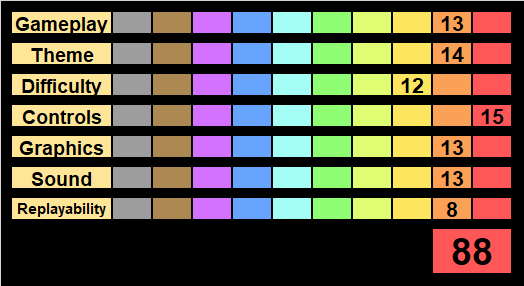 |
| Grade: B+ |
Linked Reviews
"The game takes the "B" grade horror movie theme and builds a unique action game experience around it that feels like a cross between a shoot 'em up and a scavenger hunt."
— Corbie Dillard, Nintendo Life, 8/10
"Presented in a goofy, B-movie style, the now cult-classic ZAMN set the standard for all zombie games to follow."
— IGN, #48 of Top 100
"This game has a fun premise, responsive controls, and a wonderful mix of comedy and horror."
— Kyh Yang, Ultimate Nintendo: Guide to the SNES Library, 4/5

Comments
Post a Comment